|
|
||||
|
|
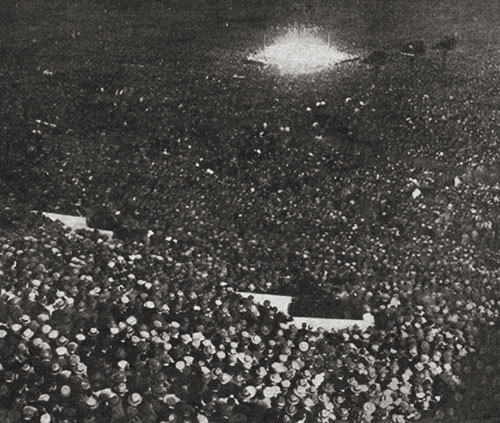
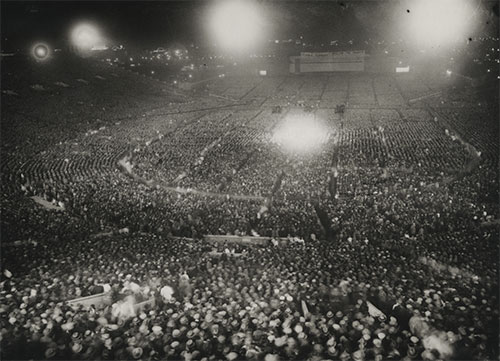
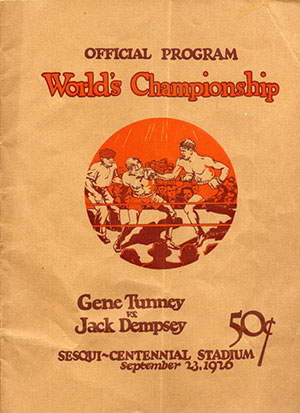
On a
cool and rainy early fall evening, heavyweight kings Jack Dempsey
and Gene Tunney climbed into the ring in front of a paid crowd of
120,757 boxing fans in Philadelphia. This marquee matchup stands as
one of the highest-profile sporting events in the history of the
“City of Brotherly Love,” and for nearly 67 years, its paid
attendance stood as the largest in boxing history.
Despite
the wet conditions, the mood at Sesquicentennial Stadium was
electric. Dempsey, the defending undisputed heavyweight champion,
entered the bout with 62 professional victories. One of America’s
great sports heroes, “The Manassa Mauler” captured the hearts and
minds of fans during a career that had already spanned more than a
decade.
According to numerous sources, Dempsey’s earliest recorded boxing
match came on August 17, 1914, when he fought Young Herman to a draw
at the Ramona Athletic Club Arena in Colorado Springs. That bout,
along with other early recorded and unofficial contests, helped
launch the young pugilist into a career in the prizefighting ring.
For more than four years, Dempsey maintained a grueling schedule,
often fighting two or three times per month. Further making his
chosen career a tough business were his opponents; Dempsey squared
off against formidable fighters with names and monikers like Gunboat
Smith, Bill Brennan, Billy Miske, Fred Fulton, Jess Willard, Georges
Carpentier, Tommy Gibbons, and Luis Ángel Firpo.
By then
commonly known as “The Manassa Mauler” because of his aggressive
style in the ring, Dempsey was advancing through the heavyweight
ranks toward a title fight. That opportunity finally came on July 4,
1919, against reigning champion Jess Willard.
The
“Pottawatomie Giant” had captured the heavyweight crown four years
earlier with a victory over Jack Johnson, the first Black world
heavyweight champion. Johnson’s reign had unfolded against the
backdrop of widespread racial discrimination in the United States,
with promoters and many white boxing fans searching for a white
fighter, the so-called “Great White Hope,” capable of defeating him.
Willard ultimately accomplished that feat on April 5, 1915, in
Havana, Cuba, knocking out Johnson in the 26th round of a marathon
45-round championship bout.
By the
time he met Tunney, Dempsey’s record stood at 62-4-9 with 52
knockouts. The aging heavyweight had not officially fought in more
than three years, but his legacy helped make him the betting
favorite. His beatdown of boxing icon Willard to capture the title
just over seven years earlier had left a lasting impact on the
psyche of American sports fans and oddsmakers alike.
Dempsey
successfully defended his heavyweight crown five times before
meeting Tunney. His July 2, 1921, title defense against Georges
Carpentier at Boyle’s Thirty Acres in Jersey City became boxing’s
first million-dollar gate, generating nearly $1.8 million in
receipts and further cementing Dempsey’s place among America’s
biggest sporting attractions.
After
returning to civilian life, Tunney resumed his professional boxing
career and steadily climbed the ranks. In January 1922, he defeated
veteran Battling Levinsky to capture the American light heavyweight
championship. Four months later, Tunney suffered the only official
defeat of his professional career when Harry Greb defeated him in a
brutal 15-round battle. Tunney rebounded from the loss and went on
to defeat Greb in subsequent meetings as he continued his ascent
toward the heavyweight division.
By the
time he received his shot at Dempsey, Tunney entered the bout with
an outstanding record of 62-1-1 with 47 knockouts. After stringing
together a series of wins over notable opponents in multiple weight
classes, including Battling Levinsky, Tommy Loughran, Harry Greb,
and Georges Carpentier, Tunney was finally given a shot at Dempsey’s
crown. The “Fighting Marine” entered the bout as the underdog
against his 31-year-old opponent.
The
selection of Philadelphia as the host city for Dempsey vs. Tunney
was not automatic. Locations in Chicago and Jersey City were
initially considered before famed boxing promoter Tex Rickard and
his financial backers selected Yankee Stadium in the Bronx. Plans
for New York ultimately fell apart when Dempsey encountered
licensing problems with the New York State Athletic Commission,
opening the door for Philadelphia to host one of the most
anticipated fights in boxing history.
The
buildup to Dempsey vs. Tunney dominated the sports pages of major
newspapers across the country. The New York Times alone published 75
articles on preparations for the fight during August and September.
Dempsey established a training camp in Saratoga Springs, New York,
while Tunney initially trained in Speculator, New York, before
moving his camp to Stroudsburg, Pennsylvania. The public interest
extended well beyond the fight itself. More than 1,000 fans paid $1
each, plus tax, to watch Dempsey work out in Saratoga Springs on
August 15. That same day, roughly 2,000 spectators watched Tunney
spar 12 rounds with two training partners.
Those
who came to Philadelphia for the affair represented a “who's who” of
American sports, entertainment, politics, and high society. Among
the famous faces at ringside were Charlie Chaplin, Babe Ruth, Norma
Talmadge, William Randolph Hearst, and Florenz Ziegfeld. Members of
some of America's wealthiest and most prominent families, including
the Astors, Rockefellers, and Whitneys, were also represented at
ringside. The political contingent included Philadelphia Mayor W.
Freeland Kendrick, New York City Mayor Jimmy Walker, Pennsylvania
Gov. Gifford Pinchot, and Secretary of the Navy Curtis D. Wilbur.
In the
wake of Dempsey vs. Tunney, the Philadelphia Chamber of Commerce
estimated that the influx of visitors generated approximately $3
million in additional local spending through hotel stays, meals,
transportation, and other purchases. Beyond the extensive newspaper
coverage, radio broadcasts and telegraph reports carried the
spectacle far beyond the confines of Sesquicentennial Stadium.
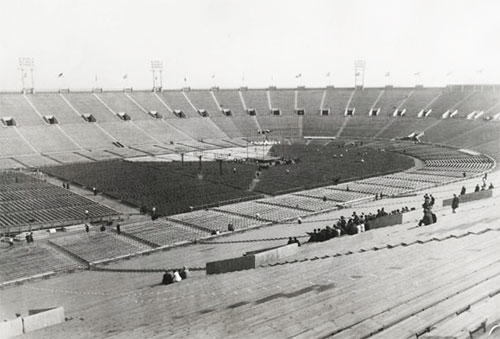
Opened
the previous April, Sesquicentennial Stadium was one of the great
American stadiums of the early 20th century. Built as part of
Philadelphia’s celebration of the country’s 150th anniversary, the
massive venue was one of several major construction projects
associated with the Sesquicentennial International Exposition. Held
in South Philadelphia from May through November 1926, the exposition
commemorated the 150th anniversary of the signing of the Declaration
of Independence and was designed to showcase Philadelphia on a
national and international stage.
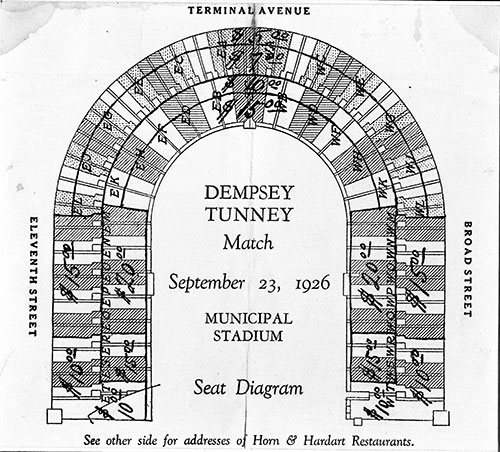
With
seating for more than 100,000 spectators, Sesquicentennial Stadium
was designed by the Philadelphia architectural firm of Simon &
Simon. Although the stadium had opened months earlier, Dempsey vs.
Tunney provided the new venue with the type of nationally
anticipated spectacle its planners had envisioned. The heavyweight
championship became one of the signature events of Philadelphia's
Sesquicentennial year, drawing more than 120,000 spectators to South
Philadelphia.
The
stadium's importance to Philadelphia sports continued long after the
exposition closed. In the decades that followed, it hosted a variety
of events, including college and professional football games, and
became a major fixture in South Philadelphia. Twenty-six years to
the day after Dempsey and Tunney met, the stadium hosted another
historic heavyweight championship fight when Rocky Marciano knocked
out Jersey Joe Walcott on September 23, 1952, to capture the title.
The
stadium occupied the site where Xfinity Mobile Arena, home of the
Philadelphia 76ers and Flyers, stands today. Throughout its rich
history, the venue was known by several names, including
Philadelphia Municipal Stadium and, later, John F. Kennedy Stadium,
before closing in 1989 and being demolished in 1992.
After
months of buildup, the attention of the sporting world finally
turned to the ring on September 23. Tunney put on a boxing
masterclass in front of the massive Philadelphia crowd that remained
in place throughout the rainy evening. The challenger utilized
superior footwork, crisp lateral movement, and sharp counterpunching
to neutralize Dempsey’s aggressive, rushing style.
Dempsey's three-year layoff showed as Tunney controlled the fight
through much of the ten-round contest. This became especially
evident in the third round when the challenger landed combinations
that included right hands and uppercuts to Dempsey's jaw and nose.
The damaged champion wiped away blood from his mouth and nose as he
walked back to his corner after the round.
By the
fourth round, Tunney's vicious combos had opened a wound near
Dempsey's right eye, causing the “Manassa Mauler's” face to flash
crimson. Dempsey fought with the heart of a champion as he absorbed
round after round of punishment from his opponent. By the closing
bell in the tenth round, Dempsey stood with a completely shut left
eye and swollen jaw.
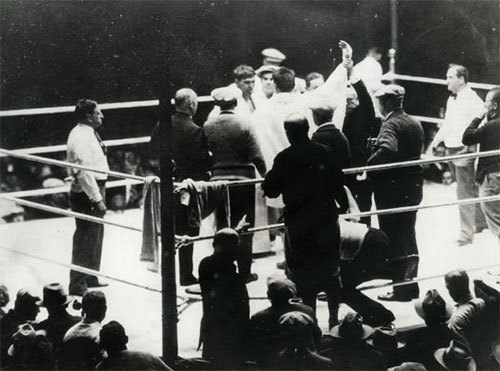
After
ten rounds of action, Tunney captured the heavyweight crown via
unanimous decision. The beginning of “The Fighting Marine's” era as
king of boxing marked the end of Dempsey's seven-year reign as
champ. Upon his return to the dressing room, Dempsey famously
explained his defeat to his wife, Estelle Taylor: “Honey, I forgot
to duck.”
Dempsey
would get another shot at regaining his title a year later. On
September 22, 1927, at Soldier Field in Chicago, Tunney successfully
defended his title in a bout famously known as the “Long Count
Fight.” Dempsey knocked Tunney to the canvas in the seventh round
but failed to immediately retreat to a neutral corner as required.
Referee Dave Barry did not begin his count until Dempsey moved away,
providing Tunney with several additional seconds to recover. Tunney
rose at the referee's count of nine and survived the round. Despite
the controversial count that would live on in boxing lore, Tunney
retained the title with another unanimous decision victory. Dempsey
would never fight professionally again, while Tunney held the title
until his retirement in 1928.  |
|||
|
|
||||
|
|
||||
|
2026 STORIES |
||||
|
|
||||
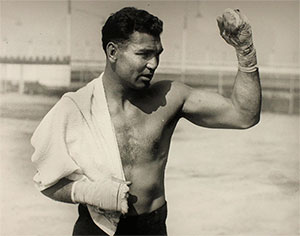 Born on
June 24, 1895, in Manassa, Colorado, Dempsey discovered the
hardships of life at a very young age. Members of his large family,
which included several siblings, were adherents of the Church of
Jesus Christ of Latter-day Saints (LDS). As a teenager, Dempsey left
home to ride the rails, drifting across the country. He made money
working a series of manual labor jobs and picked up extra cash by
challenging local toughs to boxing matches across the western United
States. Many of these early brawls saw “Kid Blackie” or “Young
Dempsey,” as he was known then, fight grown men to the delight of
local gamblers, who walked away with lighter pockets if they had the
audacity to bet against the young vagabond.
Born on
June 24, 1895, in Manassa, Colorado, Dempsey discovered the
hardships of life at a very young age. Members of his large family,
which included several siblings, were adherents of the Church of
Jesus Christ of Latter-day Saints (LDS). As a teenager, Dempsey left
home to ride the rails, drifting across the country. He made money
working a series of manual labor jobs and picked up extra cash by
challenging local toughs to boxing matches across the western United
States. Many of these early brawls saw “Kid Blackie” or “Young
Dempsey,” as he was known then, fight grown men to the delight of
local gamblers, who walked away with lighter pockets if they had the
audacity to bet against the young vagabond.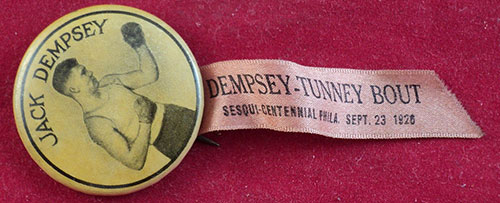
 Just
over seven years before his showdown with Tunney, Dempsey announced
himself as one of boxing's most destructive forces with a brutal
performance against Willard. Despite giving up considerable size to
the champion, “The Manassa Mauler” overwhelmed Willard from the
opening bell, knocking him down seven times in the first round. The
punishment continued over the next two rounds before Willard was
unable to answer the bell for the fourth, giving Dempsey the world
heavyweight championship.
Just
over seven years before his showdown with Tunney, Dempsey announced
himself as one of boxing's most destructive forces with a brutal
performance against Willard. Despite giving up considerable size to
the champion, “The Manassa Mauler” overwhelmed Willard from the
opening bell, knocking him down seven times in the first round. The
punishment continued over the next two rounds before Willard was
unable to answer the bell for the fourth, giving Dempsey the world
heavyweight championship.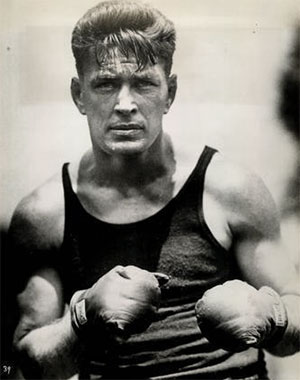 The man
scheduled to stand across the ring from Dempsey was 29-year-old Gene
Tunney, a U.S. Marine Corps veteran of the First World War. Born
James Joseph Tunney in New York City on May 25, 1897, he began
boxing as a young man before putting his budding professional career
on hold to enlist in the Marine Corps.
The man
scheduled to stand across the ring from Dempsey was 29-year-old Gene
Tunney, a U.S. Marine Corps veteran of the First World War. Born
James Joseph Tunney in New York City on May 25, 1897, he began
boxing as a young man before putting his budding professional career
on hold to enlist in the Marine Corps.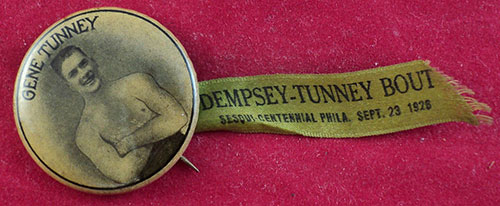
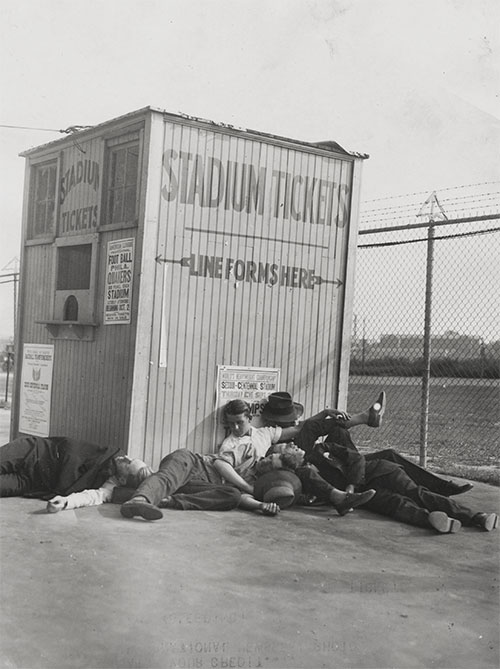
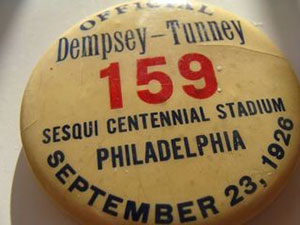 Dempsey
vs. Tunney proved to be more than a major sporting event; it was a
cultural phenomenon. As fight day approached, the championship bout
had a significant economic and social impact on Philadelphia and the
surrounding region. Extra trains were called upon to carry droves of
visitors into the city, filling Philadelphia's hotels, restaurants,
and businesses.
Dempsey
vs. Tunney proved to be more than a major sporting event; it was a
cultural phenomenon. As fight day approached, the championship bout
had a significant economic and social impact on Philadelphia and the
surrounding region. Extra trains were called upon to carry droves of
visitors into the city, filling Philadelphia's hotels, restaurants,
and businesses.